Branding now stretches beyond websites and advertising into every interaction you have through digital communication tools. The shift towards organisation-wide execution puts a premium on consistency, speed, and clarity everywhere messages are sent. New expectations and technologies are redefining how teams present brand identity across platforms.
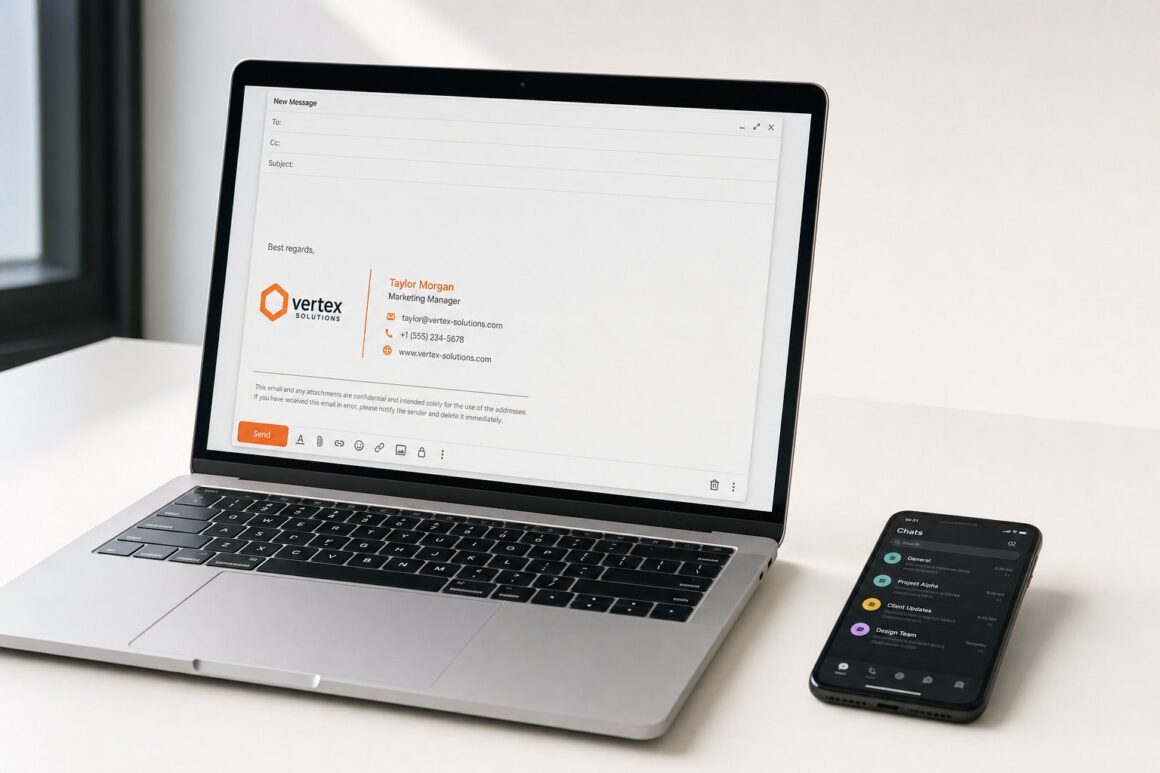
Brand consistency matters more than ever, as digital communication tools are often the first and most frequent touchpoints between your business and its audience. Within these platforms, email signature manager software is increasingly essential for aligning how teams present names, titles, disclaimers, and logos across devices and services. As internal and external communication merges through channels like messaging, meetings, and document sharing, controlling how your brand appears has become a daily operational task. Understanding the latest trends can help your organisation adapt more effectively and reduce brand risks.
Table of Contents
ToggleExpanding influence of digital communication channels
Today, digital communication tools include a wide array of messaging apps, video conferencing platforms, document sharing systems, scheduling tools, and outbound communication methods. These systems serve as the backbone of modern workplace collaboration and customer engagement.
Each communication channel provides a touchpoint for reinforcing your brand, whether shared internally among staff or externally with partners and clients. The way your organisation appears and communicates in these moments shapes external perception and internal culture alike.
The proliferation of hybrid work models has accelerated the adoption of diverse communication platforms, creating both opportunities and complexities for brand management. Organisations now routinely use combinations of email clients, team collaboration suites, customer relationship management systems, and social media channels simultaneously. This fragmentation means that brand touchpoints are no longer confined to controlled environments like corporate websites or printed materials. Instead, every message sent, every meeting invitation distributed, and every shared document becomes a potential brand moment that requires careful consideration and standardisation to maintain cohesive identity across the digital ecosystem.
Operational challenges of brand consistency at scale
Maintaining up-to-date names, titles, logos, taglines, and compliance information across multiple channels and teams presents operational challenges. Teams often struggle with outdated employee information, inconsistent use of visual assets, or missing mandatory disclaimers in regulated industries.
As organisations grow, the likelihood of inconsistencies increases, making it harder for audiences to recognise messaging as authentic and unified. Even small deviations in signature design, logo version, or tone can erode trust, confuse recipients, or raise compliance risks when not carefully managed across your communication landscape.
Design trends and user experience in branding
Effective branding within digital communication tools is increasingly shaped by minimal, mobile-first designs and accessible typography standards. Visual hierarchy is moving towards simple arrangements that prioritise clarity and legibility over excessive decoration or complexity.
Dark mode, cross-platform formatting, and responsive layouts are now essential considerations for organisations looking to reach users on different devices and services. Attention to universal design principles ensures your brand appears consistent and readable, regardless of where or how content is accessed.
Balancing governance, compliance, and flexibility
Organisations are seeking to balance centralised brand guardrails with flexibility for teams and individuals to tailor content. Approval workflows and strong version control systems provide support for managing approval processes, minimising brand risk while still enabling local relevance or customisation.
Compliance requirements demand that disclaimers, privacy statements, and identity verification cues are always present and up to date. In regulated sectors, outdated or missing compliance information can create business risk, so building these elements into brand assets and workflows is crucial.
Performance measurement and the evolving future
Measuring how brand consistency and communication performance intersect remains an ongoing focus for organisations. While some companies use engagement proxies, traffic attribution, or periodic consistency audits, not all metrics reflect meaningful operational improvement.
Automation, template-driven content, and AI-assisted governance are expected to play a growing role in keeping digital communication tools aligned with corporate branding. Keeping profile and identity data accurate will further strengthen daily brand integrity across organisational touchpoints.
Branding is now an operational practice rooted in daily communication, requiring alignment, adaptability, and consistent effort at every level of the organisation. Clarity and reliability in brand presentation can provide a real competitive edge in the evolving world of digital workplace tools.