

In the past ten years, internet gaming has gone from being a niche subculture to a worldwide phenomenon, affecting not only entertainment but also the construction and monetization of economies. As game platforms become more complex and extensive, they are no longer just a hobby. They have turned into dynamic marketplaces, entrepreneurial incubators, and innovation hubs for financial technologies. Today, gaming is not just about playing — it’s an ecosystem where users play games and earn money through platforms such as MPL, impacting a significant part of the digital economy.
At the core of this evolution is the unblemished integration of entertainment and economy — a new reality wherein players, developers, creators, and investors all help contribute to a prosperous digital marketplace fuelled by engagement, competition, and virtual assets.
The Emergence of Virtual Economies Inside Games
Virtual economies are the in-game mechanisms that simulate real-world economic activity — supply and demand, trade, labor, and even inflation. World of Warcraft, Fortnite, and Axie Infinity have led the way on this, enabling users to earn virtual currencies or tokens that can be traded for real money.
These in-game economies have evolved to such an extent that virtual items, skins, avatars, and land plots in virtual worlds are of tangible value. Some in-game items now fetch thousands of dollars, and players spend hours buying or reselling these assets for a profit. Essentially, the distinction between game economy and real economy is quickly diminishing.
Gaming as a Career: The Creator and eSports Economy
The emergence of streaming sites such as Twitch, YouTube Gaming, and Kick has provided new revenue sources for gamers beyond what they get from games. Shoutcasters, content creators, and eSports players are paid through sponsorships, advertising revenue, brand partnerships, and donations.
What’s remarkable about this is the low barrier to entry. Anyone with an internet connection and a gaming device can get started building an audience. For Gen Z and younger millennials, being a gaming content creator isn’t a hobby — it’s a viable career. This creator-first model is decentralizing entertainment and bringing new energy to the digital economy, especially as younger audiences spend more time consuming gaming content than broadcast TV.
Play-to-Earn and Blockchain Integration
The convergence of blockchain and gaming opened up new forms of digital monetization entirely. “Play-to-Earn” (P2E) games enable users to receive cryptocurrencies or NFTs (non-fungible tokens) in return for achieving objectives, defeating challenges, or trading virtual assets.
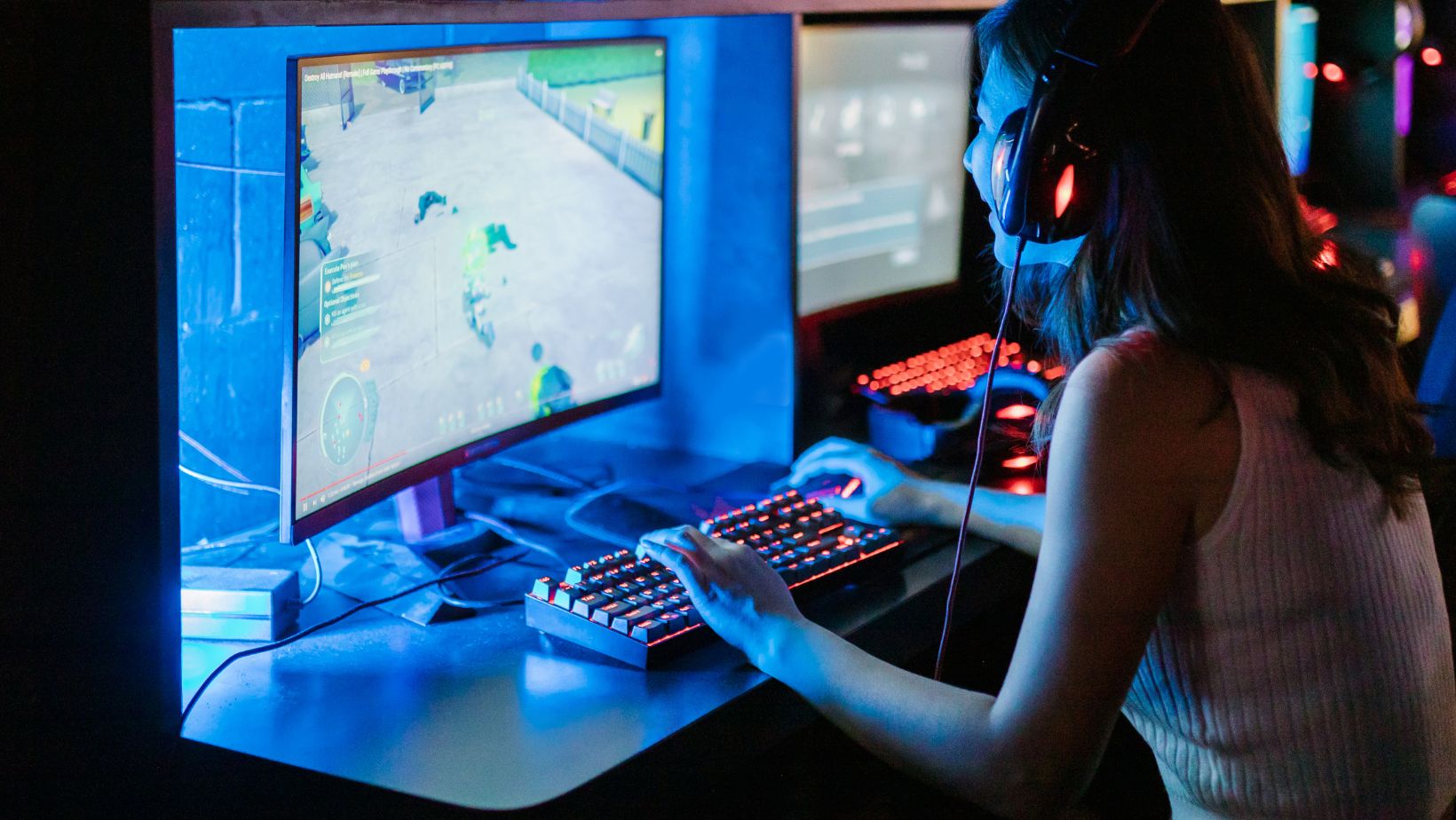
Games such as Decentraland, The Sandbox, and Illuvium provide sprawling virtual worlds with blockchain-verified ownership. These games not only give players a chance to earn but also give them ownership and control, allowing gamers to hold actual stakes in the direction the game goes. That has serious implications for the digital economy since players are now economic participants, not simply consumers.
GameFi: The Intersection of Gaming and Decentralized Finance
GameFi (Gaming + DeFi) is rapidly emerging as one of the most rapidly growing areas in blockchain technology. In GameFi systems, gamers can stake tokens, collect yields, and engage in DAO (Decentralized Autonomous Organization) governance. These aspects form an incentive system in which users are rewarded based on loyalty, gameplay, and community engagement.
These systems are transforming the way we conceptualize financial inclusion. Across much of the globe, participants are becoming financially included for the first time through their engagement with gaming platforms — earning, saving, investing, and spending in virtual worlds.
Virtual Goods: True Value in Online Objects
Digital skins, guns, avatars, and other cosmetic items are no longer incidental visual upgrades — they are a multi-billion-dollar industry. Valve’s Steam Marketplace and Epic’s Fortnite Item Shop illustrate how gamers are paying real-world cash to personalize their virtual personas.
This payment for intangible products points to a change in consumer attitudes, especially among digital natives who are very keen on virtual presence. The exchange of these products creates a healthy secondary market that feeds directly into the wider digital economy.
Employment Generation in the Gaming Industry
The virtual gaming sector is also a prime creator of employment. From AI coders to UX designers and game developers—to voice-over talents, community managers, and cyber security specialists — the ecosystem demands varied skills. In recent reports, gaming has been estimated to grow national digital economy ambitions by establishing high-skill jobs and enabling innovation in domains such as augmented reality (AR), AI, and immersive technology.
This demand for talent is inducing learning centers and web-based platforms to bring in gaming-related courses, reskilling the next-generation workforce and building the foundation for sustainable economic development.
Impacting Digital Payments and Microtransactions
Gaming has been a proving ground for digital payment innovation. In-game transactions and microtransactions need secure, quick, and easy-to-use payment systems. This need has driven the creation of digital wallets, embedded finance, and even biometric authentication to make the gaming payment process seamless.

Furthermore, tokens and cryptocurrencies are becoming a popular mode of payment in numerous gaming platforms, exposing millions of users to decentralized finance instruments and facilitating the process of normalizing their use across other industries.
The Social Layer: Communities as Economic Engines
Online game communities — on Discord, Reddit, or within-game — have become forceful social and economic players. Communities shape demand, determine product updates, and establish economies of scale via user content and peer-to-peer marketplaces.
For example, modding communities that make maps, tools, or extensions for well-known games can be turned into a money-making operation by way of donations, subscription models, or paid versions. Community participation can now be measured and is employed to help game and gaming platform valuations when fundraising rounds or acquisitions are on the table.
Conclusion
Gaming online is no longer merely about fun — it’s a fundamental pillar of the emerging digital economy. It’s transforming the way people work, earn, and interact in virtual spaces. Platforms that allow people to play and earn, such as MPL, show how the sector is creating opportunities and facilitating financial independence.
From virtual marketplaces to blockchain, from global tournaments to content creation—the world of gaming is about more than just pixels and play. It’s a vibrant economy that’s creating the rules about how value gets made, shared, and defined in the 21st century.