Online casino play started as pure software. A random number generator dealt the cards, settled the spin and paid out, and the table existed only as code. Live dealer play reversed that arrangement. A human dealer runs physical equipment in a broadcast studio, the feed is streamed to the player, and the software handles betting and settlement rather than outcomes.
As Paul Newman said: “A dollar won is twice as sweet as a dollar earned.”
That makes live casinos a technology product as much as a gaming format. Video quality, latency, studio capacity and dealer scheduling all influence the experience. For New Zealand players, there is another factor: time zones.
This article looks at what live dealer casinos are, why the format has grown in New Zealand, how the technology works, why payout reliability matters, and how NZ time affects the tables available at different hours.
Table of Contents
ToggleSo what is a live dealer casino?
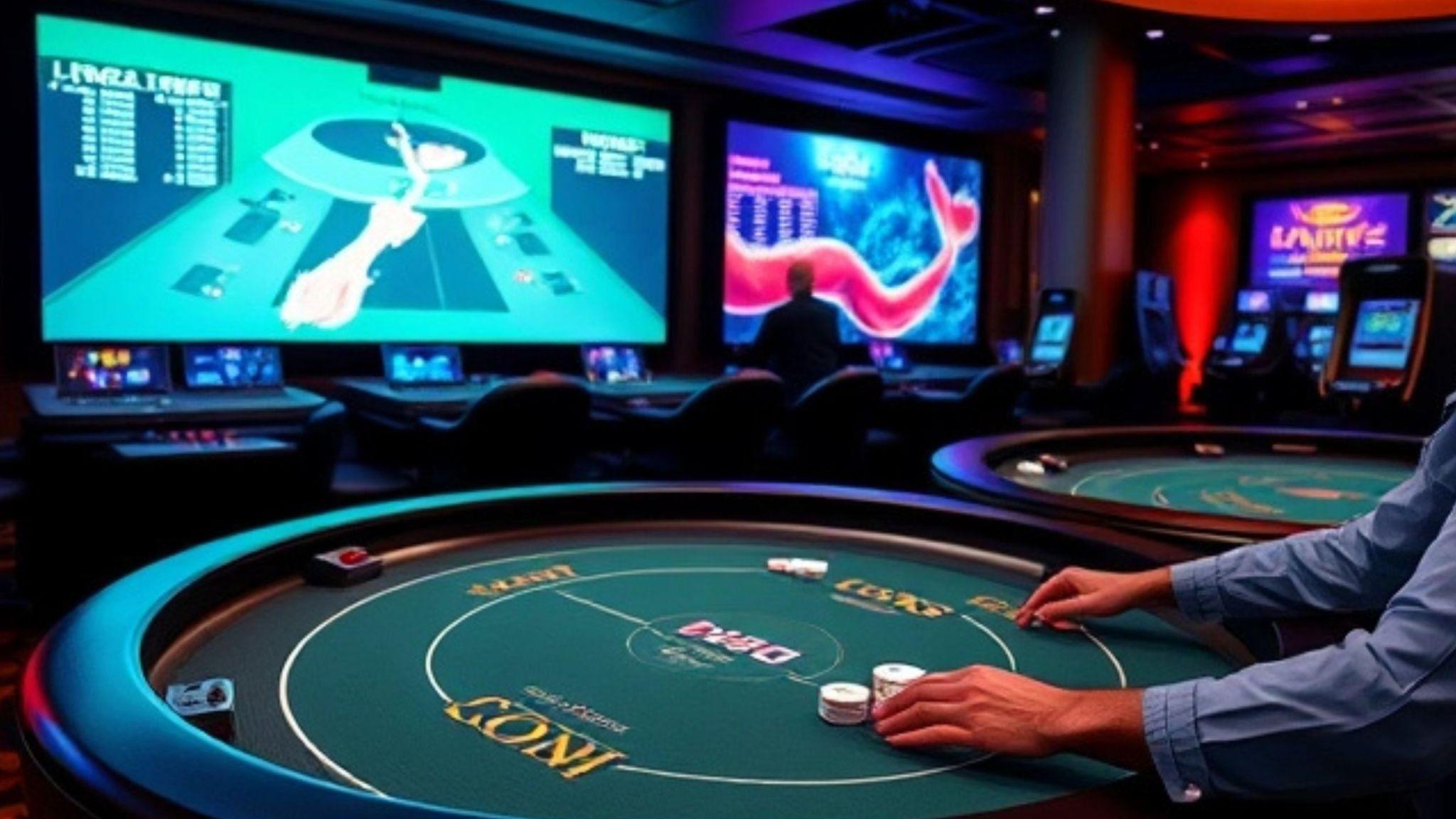
A live dealer casino streams a human croupier operating real equipment — a card shoe, a roulette wheel, a dice cage — from a purpose-built studio. Players bet through the platform interface, but the result is produced by the equipment in front of the camera rather than a random number generator. That difference defines the product. RNG table games resolve instantly and privately inside software. Live tables run at human pace, with a shared seat map, a visible dealer and the pauses that come with dealing by hand.
Little of this infrastructure belongs to the casinos. A small group of business-to-business suppliers builds the studios, employs the dealers and licenses the feed to operators. Evolution, Pragmatic Play Live and Playtech Live dominate distribution, with Ezugi and Authentic Gaming alongside them. Two competing platforms will frequently be serving the same table from the same studio floor.
Why live dealer play has grown in New Zealand
The live dealer casino New zealand market has developed around access to offshore-licensed platforms. Historically, online casino gambling in New Zealand was not regulated domestically in the same way as the country’s land-based sector, leaving players accessing international operators under licences issued elsewhere. Malta, the UK and Curaçao have all been important licensing jurisdictions for operators serving international audiences.
The appeal of live dealer play follows a broader global shift towards streamed and interactive entertainment. A live table creates a different type of interaction from an automated game: the dealer is visible, cards are physically dealt and the table operates according to a defined schedule. That combination has helped live formats become a significant part of online casino portfolios.
New Zealand’s regulatory framework is also evolving, with proposals for a domestic licensing system having progressed through the legislative process. The exact implementation details and number of future licences remain matters for the relevant authorities, making it important to distinguish the emerging domestic framework from the offshore market that has historically served NZ players.
For the same reason, live dealer casinos new zealand players encounter can differ substantially in licensing, payment arrangements and available games. The market is not defined by one technical model or one regulatory structure.
The technology behind the tables
Online casino live games rely on three technical layers, each with its own failure mode.
- Multi-camera capture. A table usually carries three to five cameras — a wide shot, a close-up on the cards or wheel, and one or more angles on the dealer — switched automatically as the round progresses.
- Optical recognition and game logic. OCR reads the physical cards and the wheel position and converts them into data the platform settles against, which is what lets a physical outcome resolve a digital bet.
- Low-latency delivery. WebRTC or a tuned HLS variant carries video and game state to the interface together, so the betting window and the picture stay in step.
The number that matters most is the latency budget. Video delay and interaction round-trip combine into a single figure, and suppliers work to hold that combined figure under a second for distant markets. Whether they manage it depends on studio location, routing and the player’s connection. The same table can feel different on two platforms for that reason alone.
Payout reliability and platform trust
A well-streamed table is half of what makes a platform worth returning to. The other half is what happens when a player wants the money out. Withdrawal processing on regulated platforms runs in two phases that are easy to conflate.
- The first is internal: a review and approval window, commonly same-day on MGA or UKGC operators.
- The second is the payment rail — near-instant for e-wallets and crypto, one to three business days for cards and bank transfers. A platform can be quick on one and slow on the other.
Two further mechanics shape the experience. Cashout caps, set weekly or monthly, are common on licensed operators and often go unnoticed until a player wins enough to hit one. KYC verification is required before a first withdrawal, and it is the point at which slow platforms reveal themselves. Withdrawal speed sits alongside table quality as the metric that separates a repeat platform from a one-off visit — reviews of the best payout casino nz operators focus on processing times, licence transparency and cashout limits, criteria that become obvious across regular live dealer sessions.
How streaming tech and time zones shape gameplay
Geography shapes live dealer casinos nz players encounter more than any platform setting does. New Zealand runs on NZST (UTC+12), or NZDT (UTC+13) in daylight saving, putting it 11 to 13 hours ahead of the European studios supplying most tables. Peak local evening play lands in the European early morning. Premium studios run fuller, seats at quieter Asia-Pacific tables open faster, and non-English dealer coverage matters.
The best live dealer casinos New Zealand players return tend to solve two related problems: where the stream originates and how fast it arrives. Betting timers on live blackjack and roulette usually run 10 to 15 seconds. A second of lag removes a meaningful share of that window, and removes it at the end, when the decision is made. Suppliers have answered with Asia-Pacific studios on regional dealer shifts. Evolution opened its first Asian studio in Cebu.
Live game shows are the fastest-growing sub-category. Crazy Time, Monopoly Live and Dream Catcher are built around a presenter, a timer and a wheel, which makes them as lag-sensitive as any blackjack table and more dependent on dealer scheduling. What makes for the best live dealer online casino experience in NZ hours is the combination of both: a stream that arrives in time, and a table staffed at local hours.
The bigger picture
Live dealer is a technology product operating inside a regulatory frame and a geographic one. For New Zealand that means offshore studios, a licensing regime still being built out, and a clock that puts peak local play in the middle of the European night. All three shape what appears on screen.