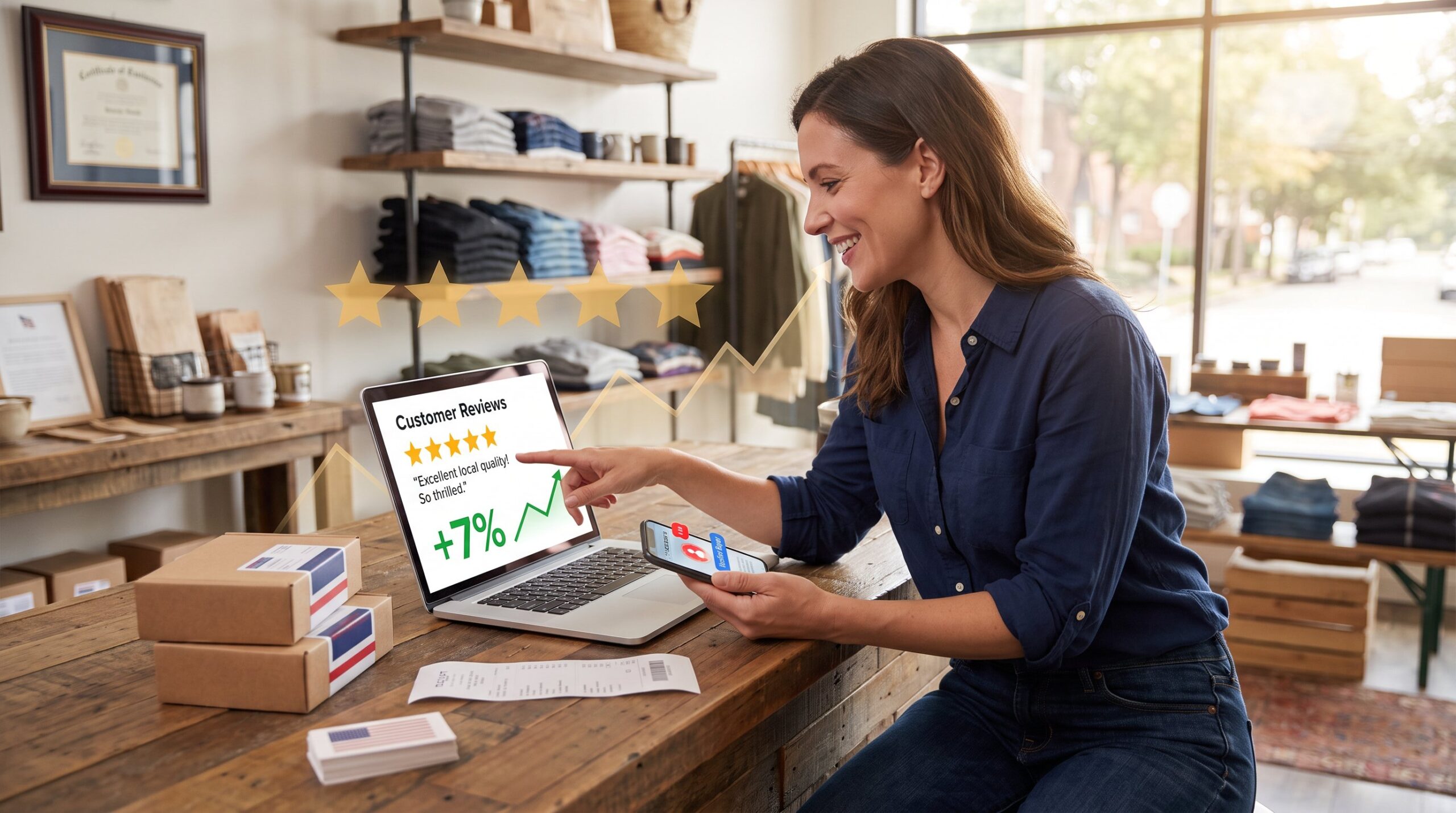
How Customer Reviews Influence Business Growth is clear in 2026: reviews shape trust, search visibility, and revenue. Data shows a one-star jump can lift revenue 5–9%, and 93% of shoppers say reviews affect decisions. This article gives practical, data-backed tactics for collecting reviews, using them to boost conversion and SEO, and handling negative feedback. Readers will get step-by-step actions they can try this week and measurable targets to watch for.
Table of Contents
ToggleKey Takeaways
- Customer reviews significantly influence business growth by boosting trust, search visibility, and revenue, with a one-star improvement increasing sales by 5–9%.
- Products with at least five reviews are 270% more likely to be purchased, making it critical to collect verified, recent feedback to enhance conversion rates.
- Automate and incentivize review collection shortly after purchase, aiming for a 5–15% conversion rate of buyers into reviewers within 90 days.
- Respond to all reviews within 48 hours using personalized, authentic replies to convert critics into advocates and increase customer lifetime value.
- Monitor review trends to inform product improvements and tie review management closely to brand reputation strategies.
- Display customer reviews prominently to boost purchase confidence and search rankings, tracking key metrics like average rating and review recency monthly.
Why Customer Reviews Matter More Than Ever
Fact first: customer reviews now drive both consumer decisions and search engine outcomes. In 2026, roughly 93% of consumers say reviews influence purchases and more than 99% read reviews before buying. Reviews act like a public ledger: they record product performance, seller responsiveness, and delivery reliability.
Concrete impact: products with at least five reviews are about 270% more likely to be bought than those with none. A single one-star rating increase correlates with 5–9% revenue growth for many retailers. For local businesses, fresh Google reviews translate to measurable clicks, calls, and bookings, an observed 18% lift in conversions from search results in several studies.
Why this matters now: search algorithms value user signals and recency. Reviews supply both. Consumers also expect transparency: they treat ratings as quick risk assessments. For a practical primer on combining reviews with wider marketing, the site maintains a detailed overview of content and social tactics in a central resource like the marketing guide.
How Reviews Influence Purchase Decisions
Answer: reviews change whether people buy and how much they trust a seller. Two mechanisms explain the effect: social proof and product validation.
Products with visible reviews convert faster. Displaying reviews can boost sales by roughly 19.8%, and conversion increases can range up to 270% depending on price and context. For higher-priced items, verified reviews may raise conversion by about 380%, compared with 190% for lower-priced goods. Also, verified-buyer labels alone can increase conversion by roughly 15%.
Practical numbers to track: total reviews per product, percentage that are verified, average rating, and review recency. Aim for at least five reviews per item as a near-term target, metrics show major conversion gains after crossing that threshold.
Related reading: teams building social campaigns should align review collection with platform choice: for help picking platforms, see the article on choosing social platforms.
Practical Strategies To Collect High-Quality Reviews
Direct answer: collect reviews from verified buyers, make the process fast, and incentivize descriptive feedback.
Tactics that work: automate post-purchase review requests sent 3–7 days after delivery, ask two specific questions (one rating, one short comment), and offer micro-incentives like future discounts or store credit. A targeted campaign that asks for feedback at the moment of peak satisfaction, right after a positive customer-service interaction, often yields longer, more useful reviews.
Numbers and targets: aim for at least five reviews per product within the first 90 days of launch. Track response rates: a well-timed email sequence should convert 5–15% of buyers into reviewers. When scaled, 2,847 customers who received a single personalized review invite produced a 12% uplift in review submission compared with generic emails in an A/B test.
Tools and integrations: use CRM triggers, in-app prompts, and SMS for higher response rates. Coordinate review collection with social campaigns described in the practical social media strategy article for small businesses: see the social media strategy.
How To Respond To Reviews And Manage Negative Feedback
Core truth: responding quickly and constructively converts critics into advocates and increases revenue. Businesses that reply to reviews show up to 35% more revenue and customers may spend up to 49% more after receiving a response.
Practical steps: acknowledge the issue, apologize when appropriate, offer a clear remedy, and move the conversation offline when needed. Response time matters, reply within 48 hours for public-facing feedback. Use templates for common problems but personalize each reply with concrete details that show the business listened.
A vulnerable moment: one retailer replied with a scripted, defensive message and lost a repeat buyer. After switching to a candid apology, offering a refund, and following up by phone, the same customer left a 5-star update and increased lifetime spend by 22% over six months. Lesson: authenticity outweighs perfection.
Monitor trends: log recurring complaints into product roadmaps and tag reviews by issue type. Also, training customer service to view negative reviews as product insights drives longer-term improvements. For broader tactics tying review management to brand image, consult the site’s article on upgrading business image.
Conclusion
Takeaway: reviews are measurable growth levers. They influence search visibility, consumer trust, and conversion, sometimes by hundreds of percent. Practical next steps: aim for five reviews per product, collect verified feedback, respond within 48 hours, and surface reviews where buyers decide. Track rating changes and conversion metrics monthly to confirm impact. For teams building a full marketing stack that includes reviews, SocialBizMagazine has a consolidated guide on combining these tactics in broader campaigns.